“A data center that comes online one month late does not just miss a deadline. It wipes out returns that took years to build.”
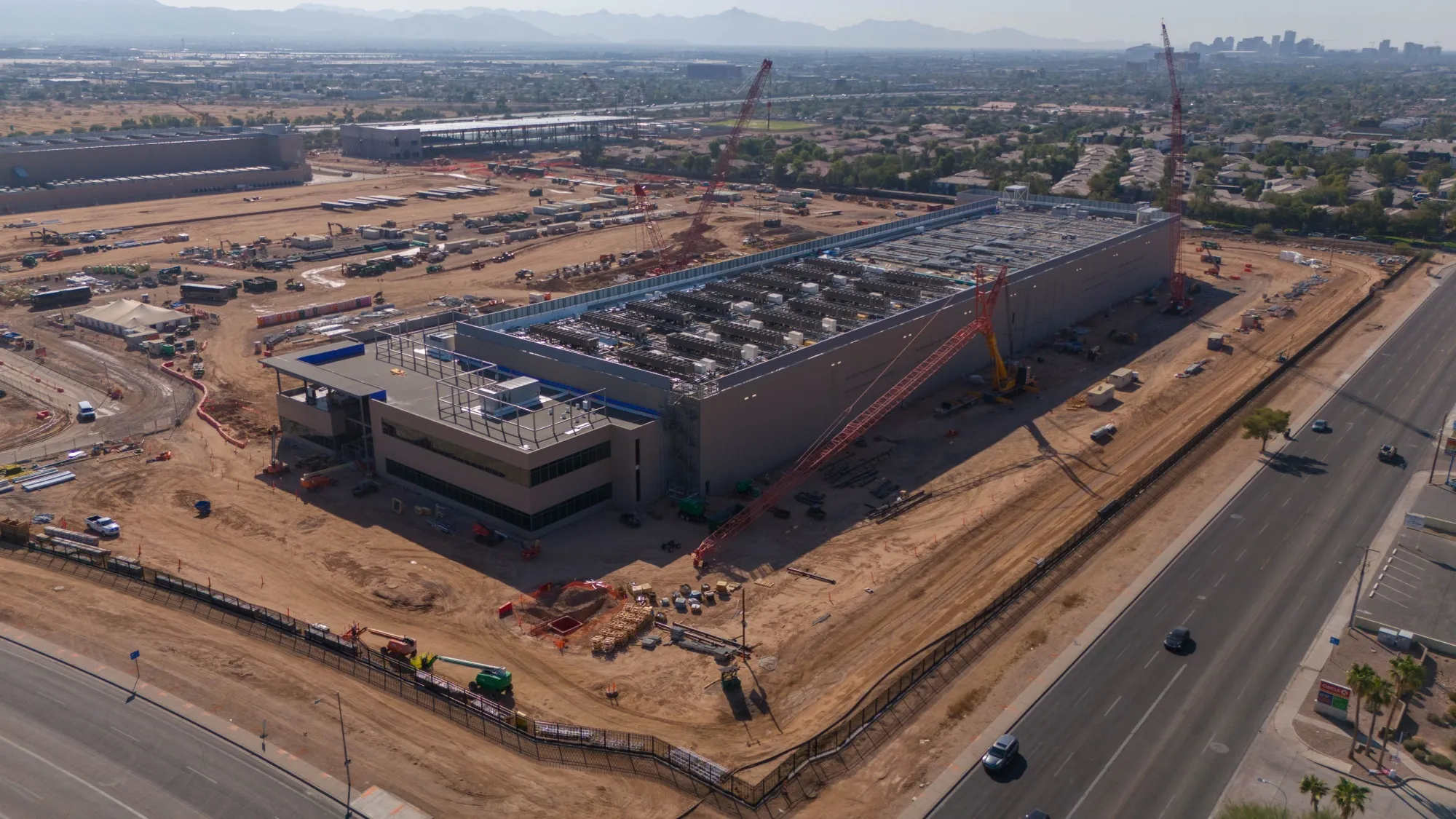
US data center construction has reached $85 billion of work in 2026, and the pressure on project controls teams has never been higher. Hyperscale campuses are being built faster, at greater complexity, with more stakeholders demanding real-time visibility into cost and schedule than any previous generation of capital programs. archdesk
Reporting is not keeping up. And that gap is exactly where Queryon works.
Why Data Center Construction Is a Reporting Problem
Data center programs have characteristics that make reporting genuinely difficult. Long-lead equipment is one of the most schedule-sensitive realities of data center construction, with switchgear and cooling systems carrying lead times that can stretch beyond a year. When a piece of critical equipment is running late, the downstream effects on installation sequencing, commissioning, and activation timelines are immediate and compounding. contruent
At the same time, delays in data center construction are costly, often wiping out millions in revenue and eroding project returns with every month of slippage. The IRR math on a hyperscale campus is unforgiving. A reporting environment that flags a cost trend or schedule risk two months late is not useful. It is a postmortem. datacenterdynamics
The data integrity challenge of inconsistent reporting and the burden of manual validation is what most data center programs are actually dealing with. Schedule data in P6. Cost data in a separate system. Procurement status in another tool entirely. And a project controls team spending the first half of every reporting cycle pulling it all together by hand rather than analyzing what it means. stlpartners
What Good Reporting Looks Like for These Programs
Project controls now extend beyond baseline scheduling and cost reporting for data center programs. Real visibility means knowing where procurement milestones stand relative to installation windows, how period spending compares to the burn rate the schedule implies, and which cost codes are trending toward overrun before the monthly report makes it official. cmicglobal
That level of visibility requires a reporting system where the data is current, consolidated, and structured in a way that supports the questions leadership is actually asking. It does not come from running exports and building pivot tables. It comes from a data architecture designed from the beginning to support real-time reporting across all of the source systems a program relies on.
Within a project controls system, reporting means current — costs tracked daily, schedule status updated in real time, and variances flagged before they compound. That is the standard Queryon builds to. contruent
How Queryon Approaches Data Center Programs
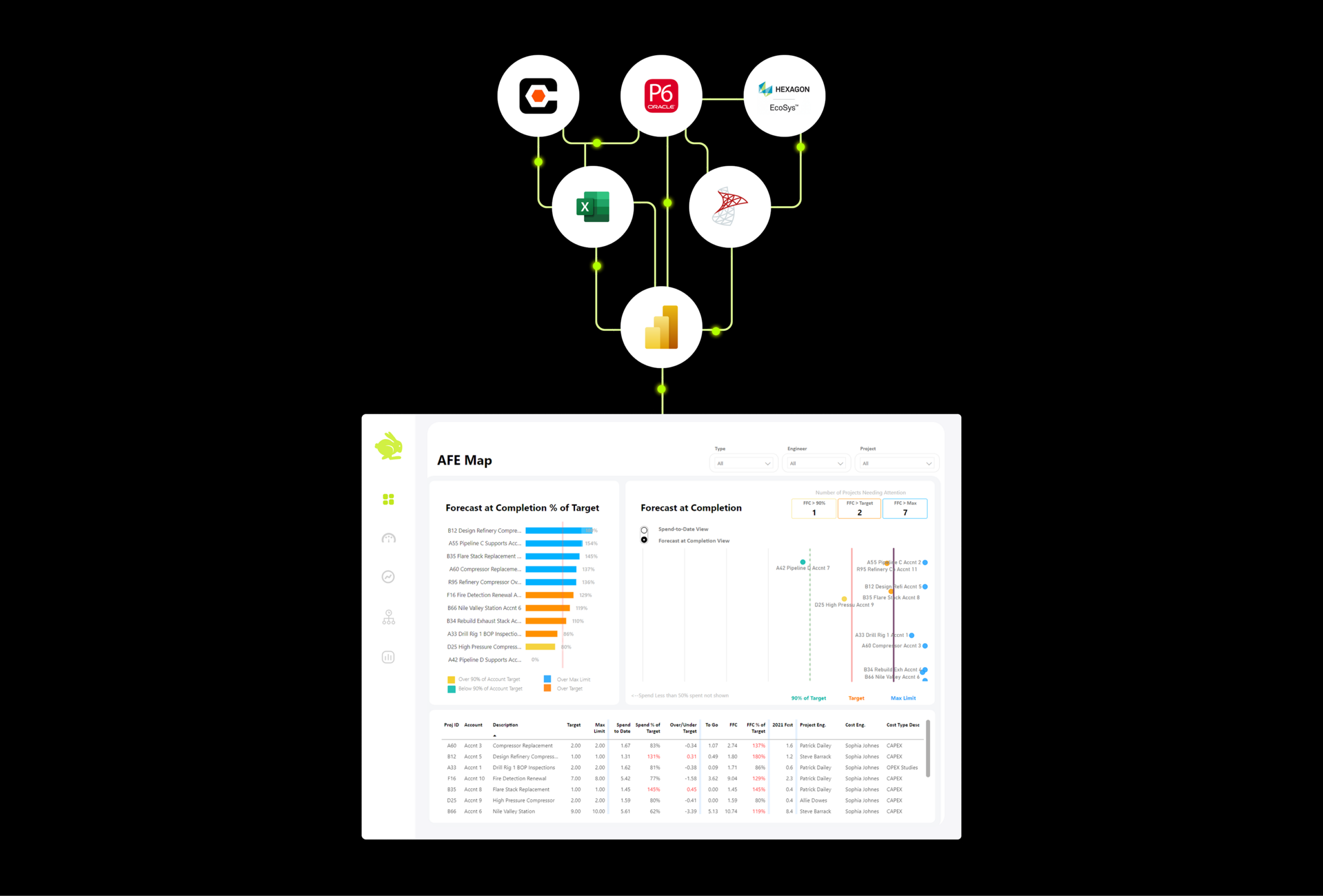
The data sources on a hyperscale data center program are familiar. P6 for scheduling. Procore or a similar tool for field management and document control. SAP or Oracle for cost and financials. Sometimes a procurement system sitting alongside all of them tracking equipment status independently.
Queryon builds the data infrastructure that connects these sources into a single reporting environment. Automated pipelines pull from each system on a scheduled basis, clean and align the data, and feed Power BI dashboards that give the project controls team and ownership a consistent, current picture of program status.
We build views specific to each audience. A project controls analyst needs granularity and the ability to drill into cost code level detail. An executive sponsor or capital partner needs a high-level status read they can absorb quickly and act on. Ownership and investors need confidence that the program is being actively managed and that variances are being addressed, not discovered.
All of it runs from the same underlying data. The logic is built once, correctly, and serves every audience without requiring someone to manually produce a separate report for each.
Why This Matters More in Data Centers Than Almost Anywhere Else
Most capital project sectors have some tolerance for reporting lag. A monthly status report that is a week late is an inconvenience. In data center construction, where activation timelines are tied directly to revenue, compute capacity commitments, and hyperscaler agreements, that tolerance is essentially zero.
Integrated reporting enables timely escalation, reducing overruns and improving control. That is not a theoretical benefit. It is the difference between catching a cost trend at two percent variance and catching it at twelve. stlpartners
Queryon builds reporting systems that give data center construction programs the visibility they need to make decisions in real time, not in retrospect.
If your program is growing faster than your reporting can keep up with, that is the problem we are set up to solve.