"Anyone can build a chart. It takes a project controls background to know which chart actually matters."
There is no shortage of data consultants, analytics firms, and Power BI developers available for hire. So why does the firm you choose for capital project reporting matter so much?
Because building a dashboard is easy. Building a dashboard that reflects how project controls actually works is something else entirely.
Most Analytics Firms Do Not Understand Your Industry
A general data analytics consultant can connect to your data sources, pull numbers into Power BI, and produce something that looks professional. But if they do not understand the difference between a baseline finish and a forecast finish, or why period variance matters more than cumulative totals in certain reporting contexts, the output will look good and communicate almost nothing useful.
Capital project reporting has a logic to it that is specific to the industry. Earned value, schedule performance index, cost at completion, period completeness, WBS alignment across systems — these are not generic business intelligence concepts. They are specific to how capital programs are planned, tracked, and reported to ownership.
A firm that does not live in this world will spend your engagement getting up to speed on concepts your project controls team already considers basic. You end up paying for their education.
The Tools Are Only Part of It
Power BI is a powerful platform. But the tool is only as good as the data behind it and the logic built into it.
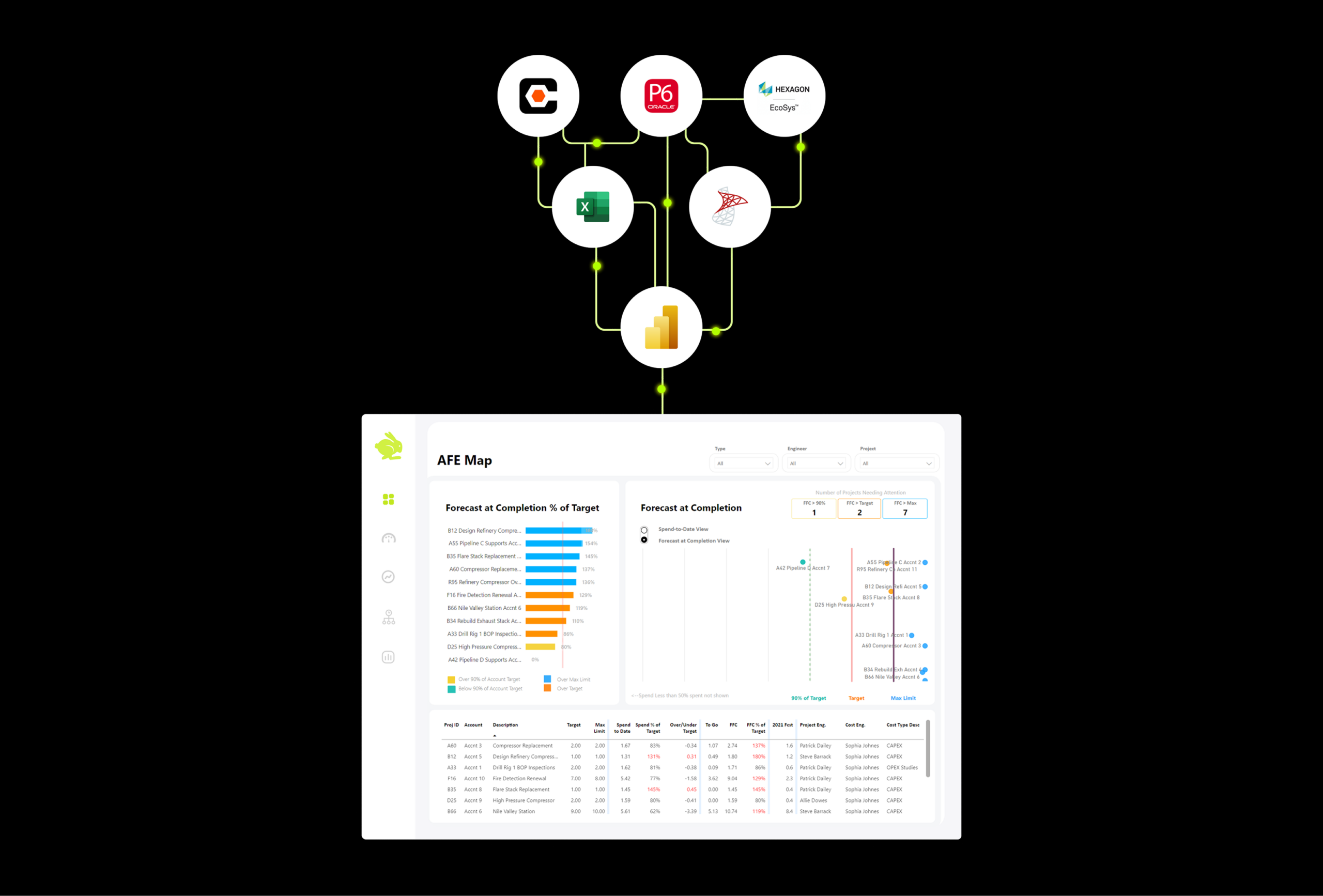
Getting capital project data into a reporting-ready state requires working across systems that were never designed to talk to each other. Oracle Primavera P6 structures schedule data one way. SAP and Oracle cost systems structure financial data another way. Procore, Unifier, and Aconex each have their own data models. Pulling all of that into a single source of truth, with consistent WBS codes, aligned period definitions, and reliable automated refresh, is a data engineering challenge on top of a project controls challenge.
Queryon operates at both levels. We understand the source systems because we have worked inside them. We understand what the data needs to look like on the other side because we know what project controls teams and executive stakeholders actually need to see.
What Makes Queryon Different
We are not a general analytics firm that added capital projects to our service list. Project controls and capital program reporting is what we do.
Our team has direct experience with the tools capital project teams use every day, including P6, Procore, SAP, and the Microsoft data stack. When we design a reporting architecture, we are not guessing at how the source data is structured or what the downstream reporting requirements should look like. We already know, because we have built it before.
We also understand that a dashboard is not a deliverable on its own. The infrastructure behind it, the data pipelines, the refresh logic, the access controls, the maintenance plan, is what determines whether it keeps working six months after we hand it over. We build for longevity, not just for launch.
And we use modern tools intelligently. Our team incorporates AI, including Claude, into the way we work. That means we move faster, write cleaner code, and spend more of our time on the work that requires actual judgment rather than the mechanical parts that do not.
What Working With Queryon Looks Like
Every engagement starts with a structured assessment. We map where your data lives, how it is structured, and what gaps exist between your current reporting and what leadership actually needs. That assessment shapes everything downstream and means we are not building solutions to problems we have not fully diagnosed.
From there we design and build the data architecture, the pipelines, and the dashboards in a way that is specific to your program, your tools, and your reporting cadence. We do not deploy templates and call it done. Every solution is built around the way your organization actually works.
We also prioritize knowledge transfer. The goal is not to make you dependent on us for every report change. The goal is to hand over something your team understands and can work with, with Queryon available when the complexity warrants it.
If You Are Evaluating Partners for This Work
The right question to ask any firm is not whether they know Power BI. It is whether they know what a period variance report should show, why your P6 data and your cost data will never align without deliberate data modeling work, and what executive stakeholders in capital programs actually need to see to make decisions.
If they hesitate on those questions, keep looking.
If you want to talk to a team that already knows the answers, that is what Queryon is here for.